


Already in the early Middle Ages, in the area of Salerno called “Plaium montis” there was a large terraced vegetable garden, inside which a perennial spring gushed. A complex canalization system, created thanks to the techniques imported by the Arabs, guaranteed the irrigation of the countless plants grown there. The “viridario”, as the garden was called, was owned by the Silvatico family since the 12th century. The garden was soon made available to the Salerno medical school. Here lessons were held to learn how to recognize medical plants, they taught how to grow them, which parts could be used and with which therapeutic properties. Thus was born in Salerno the first botanical garden in Europe.
The Minerva Garden
We can imagine the young Trotula walking in the avenues following the other students of Matteo Silviatico and the other teachers, to then see her as a teacher at the head of the new school levers, who came to Salerno from all over Europe to learn the medical arts, such it was the prestige of the institution.
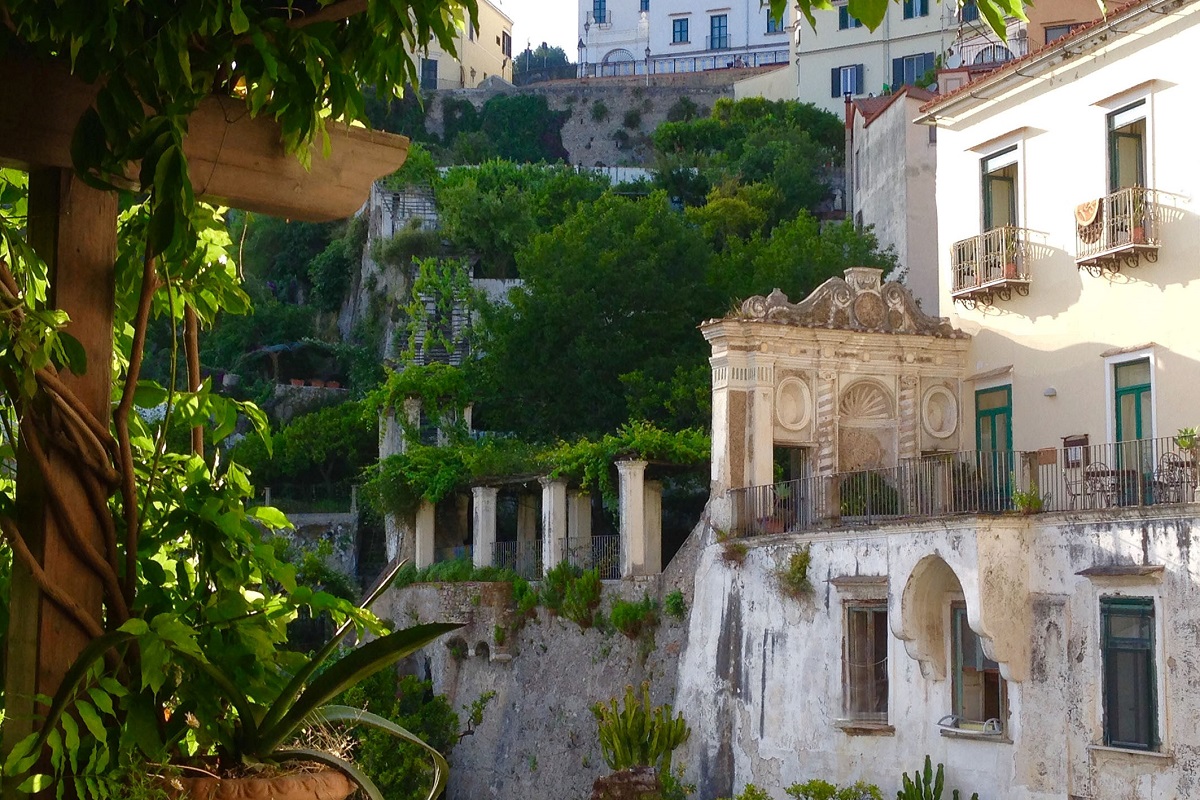
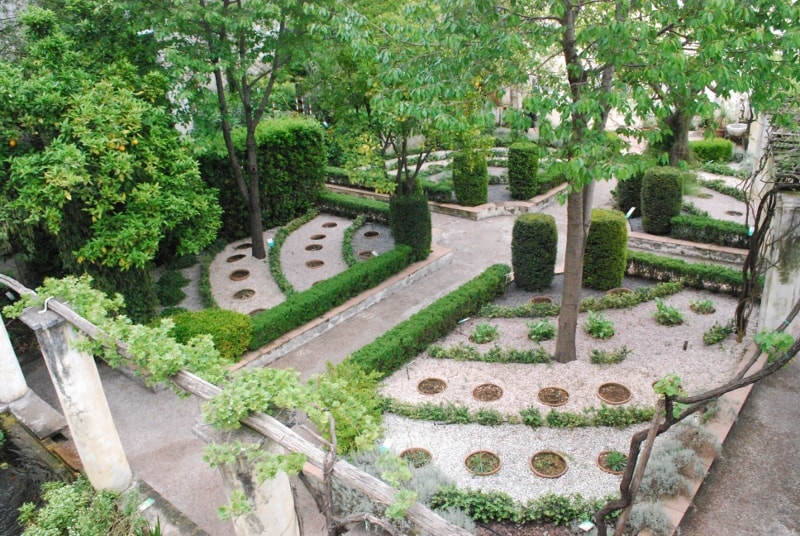
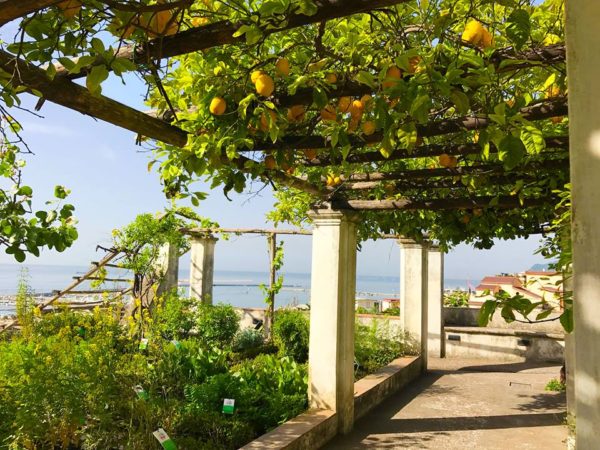
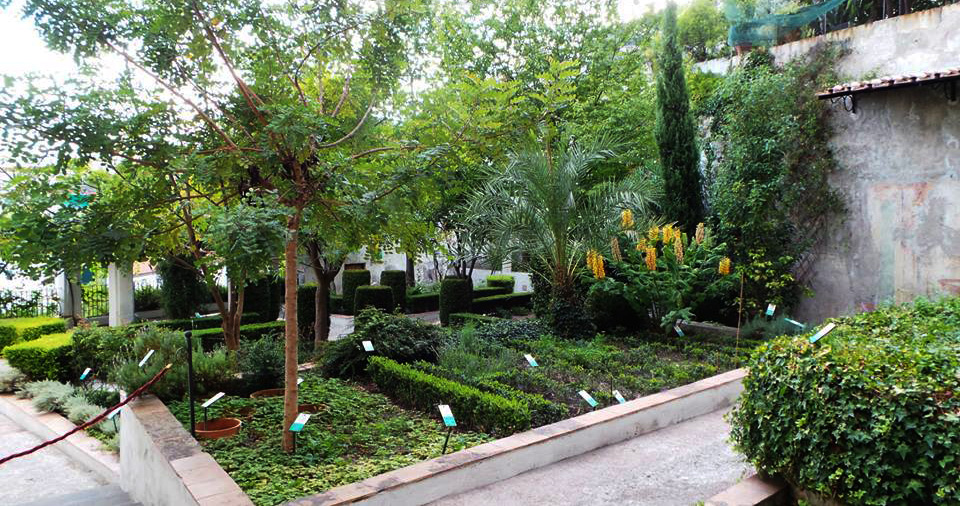
Today the ancient botanical garden still exists, it is called the Minerva Garden. Over the years the garden has become the property of the Municipality of Salerno, which continues to keep its centuries-old tradition alive by growing more than 250 species of plants, including the legendary Mandragora. Today, as then, the love for the transmission of knowledge is alive: throughout the year, educational workshops are held for schools and for small groups, which aim to teach the recognition of the plant species present and the lotus use, just as it was done in the Middle Ages. The library of the gardens is also available to connoisseurs.
Recent archaeological studies have established that the walkable soil of the original medieval garden is currently two meters below the ground of the current garden.