


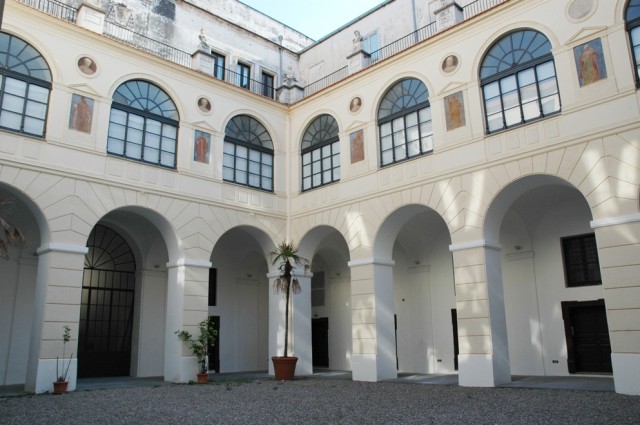
Although our two ladies have never been in this palace, built a few centuries after their death, we invite you not to overlook a visit to the Diocesan Museum of Salerno, housed in a splendid sixteenth-century building which stands close to the Cathedral of San Matteo, because you will find a lot about them. The building was one of the last locations of the Salerno Medical School, where diplomas were delivered to undergraduates. The museum displays pictorial works of art and sculptures dating from the Middle Ages to around 1700. Medieval artifacts have been largely recovered from the sacristy of the Cathedral.
Diocesan Museum
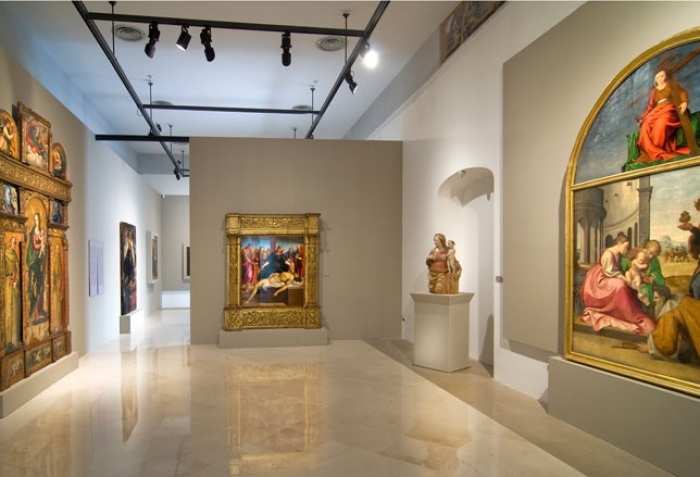
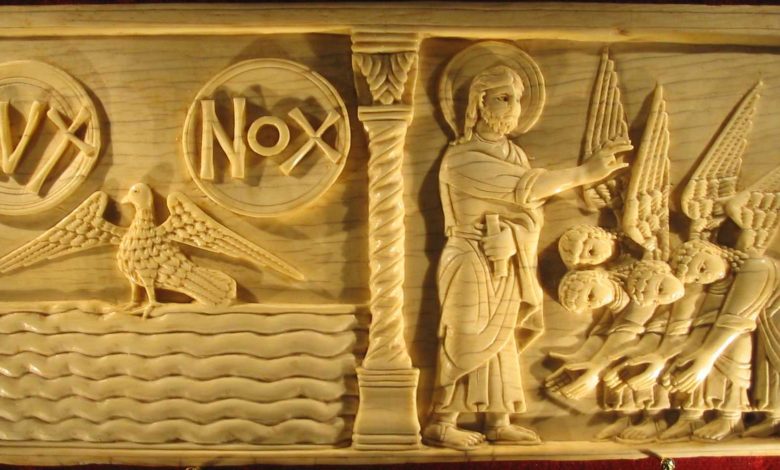
Of particular value is the collection of 67 historiated ivory tablets, which reproduce with impressive details passages taken from the Holy Scriptures. It is believed that they were used in the past as tesserae of an altarpiece for the Duomo: closing your eyes you can well imagine Sichelgaita praying in front of them. Another finding that takes us back to the events of the beautiful warrior is a precious wooden cross, covered with two brass sheets with hard stones and translucent enamels: tradition has it that it belonged to Roberto il Guiscardo, her beloved husband. It seems he never left in battle without taking her with him as a sign of devotion and protection. Another important finding, which probably will have been under the eyes of the two noblewomen, is an illuminated scroll of the Exultet, divided into 11 parchment sheets illustrating the Easter Preconio (praeconium paschale, announcement of Easter), dating back to the end of the first half of the thirteenth century . The preconio is one of the oldest sacred songs that have come down to us, it was already in use in the communities of the first Christians and there is no celebration of Easter, anywhere in the world, where it is not intoned. It is likely that the two ladies were also taught, their families being very close to the Church and assiduous in observing the precepts.
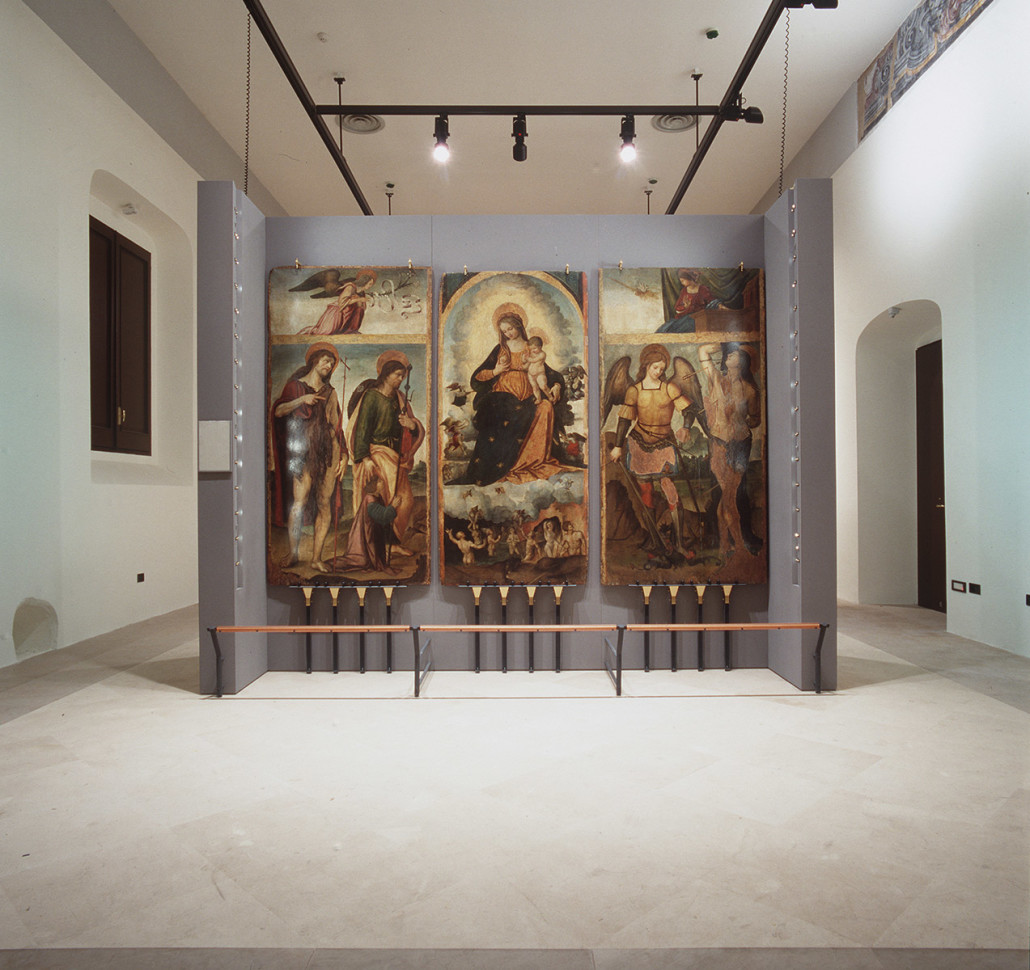
Many other finds will fascinate you inside the museum, such as the tempera paintings with sacred subjects by Giotto’s Roberto de Oderisio, or those by Vincenzo De Rogata. The collection of ancient coins is also noteworthy, which includes coins from Magna Grecia, the Roman Republic, the Roman Empire and the Mint of Salerno. Among these, do not miss the famous Follaro of Gisulfo II with the representation of the Opulenta Salernu.